Contents
Swelling after aesthetic procedures often causes unnecessary worry, especially when people expect fast, visible changes. After a PDO thread lift, clients frequently ask whether warm compresses are helpful or harmful. The short answer is: timing matters. Understanding what your skin is doing beneath the surface, how the healing phases unfold, and how small habits affect comfort can make the difference between anxiety and a smooth recovery.
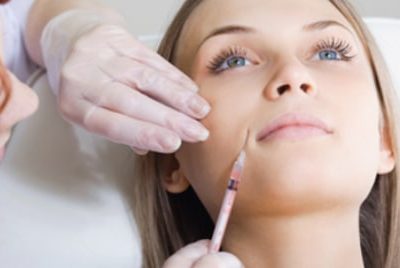
A PDO thread lift is designed to reposition tissue and stimulate collagen production without surgery. Because it is a minimally invasive procedure, swelling is usually part of the normal response rather than a complication.
After the thread lift procedure, most patients will experience swelling, and this can include bruising, tenderness, and slight discomfort. This reaction is tied directly to the healing process, as the body responds to the inserted threads:
Immediately after a PDO thread lift, practitioners usually recommend a cold compress or cool compress. Cooling limits blood flow and helps reduce most swelling during the earliest phase of healing. A cold compress works best in the first 24–48 hours, when inflammation is at its peak. Using an ice pack gently, without added pressure, can also reduce discoloration.
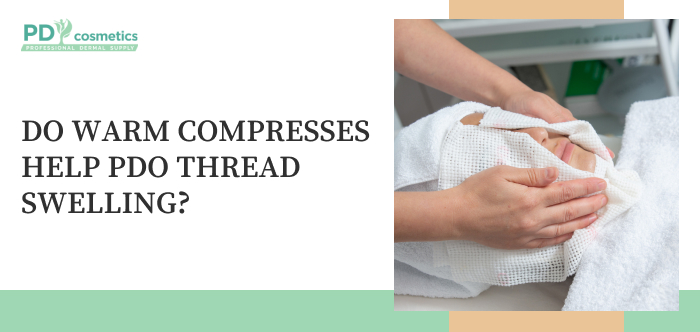
Warm compresses are not meant for the initial stage of healing. Applying heat too early may increase blood flow and worsen swelling in the treated area. Warm compresses may only be considered later, once the skin heals and threads settle, typically at least a week after treatment, and only if advised by an expert team.

Understanding what to experience helps reduce concerns. A PDO thread lift offers immediate results, but the internal healing takes time, and full results appear gradually:
The visible lift is immediate, but the biological healing process continues long after the surface looks calm. This is why patience is essential during recovery time.
How you spend your nights affects swelling more than most people realize. Proper sleeping positions support circulation and reduce fluid buildup:
Although a PDO thread lift has minimal downtime, activity choices still matter. Overexertion can disrupt healing and increase swelling. During the first one week, patients should:
Many providers also advise avoiding strenuous workouts and even intense stretching, as excessive movement may affect how the threads anchor during healing.
Good aftercare supports comfort and reduces the risk of complications like Infection. These aftercare tips focus on protecting the skin and supporting internal repair:
Medication choices matter too. Many clinics suggest you avoid NSAIDs such as aspirin and ibuprofen, as they can worsen bruising during early healing.
What you eat influences how efficiently your body repairs itself. Supporting healing from within can subtly improve comfort and outcomes:
Balanced nutrition supports collagen production, which is key to achieving a youthful appearance and long-lasting results from your PDO thread lift.
While swelling and temporary skin changes are expected, certain signs should prompt a call to your clinic. Monitoring your treatment results helps address concerns early.
Contact your provider if you notice:
A scheduled follow-up appointment allows your provider to assess how well the threads are settling and whether any complementary treatments might enhance your outcome.
A PDO thread lift is often chosen by people with early sagging skin who want visible lifting without surgery. It is a minimally invasive option and sometimes considered a non-invasive alternative to more aggressive surgical options.
Because the treatment stimulates collagen production, results continue to improve even after swelling resolves. This makes the PDO thread treatment appealing for those seeking refinement without extended downtime. Choosing high-quality threads is just as important as technique, which is why many clinics work only with certified suppliers when they PDO buy online to ensure safety and predictable outcomes.
Warm compresses are not inherently bad, but timing is everything. In the early days after a PDO thread lift, cold therapy helps manage discoloration and swelling, while heat is best avoided until the later stages of healing. By respecting the recovery process, adjusting sleeping habits, limiting activity, and following professional guidance, patients can feel confident about what to expect and enjoy the gradual refinement that defines successful treatment.
Warm compresses are generally not recommended in the first days after the procedure, as heat can increase circulation and make swelling more noticeable. In most cases, cooling methods are preferred early on, while heat may only be considered later and strictly under professional guidance.
Initial changes like swelling or tenderness typically improve within the first week, but deeper tissue repair continues for several weeks. This gradual internal recovery is essential for stable results.
Recovery is usually straightforward and allows patients to return to daily routines quickly. Mild restrictions help protect the treated areas while the threads integrate properly.
Keeping the head elevated, limiting intense activity, and following personalized aftercare instructions are the most effective ways to support comfort and reduce visible swelling.
An experienced provider ensures correct technique, proper aftercare, and early detection of potential issues. Patients are typically advised to avoid wearing makeup for a short period to reduce irritation.
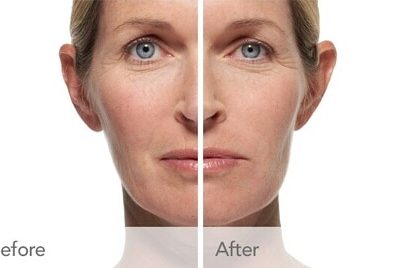
While some lifting is visible right away, the most noticeable improvement develops gradually over several weeks as collagen strengthens and the tissue settles into its new position.