Contents
A single syringe of Juvederm can make a visible difference in the cheeks, but “visible” and “enough” are not quite the same thing. For someone with mild volume loss, especially younger patients looking for a small amount of contour or a natural lift, one syringe may fit the plan perfectly. An older patient with flatter cheeks, descending fat pads, or more obvious age related changes may need a different approach.
The real question is not simply how much cheek filler fits into one appointment. It is how much product is needed to create the right facial proportions without pushing the face toward an overfilled look.
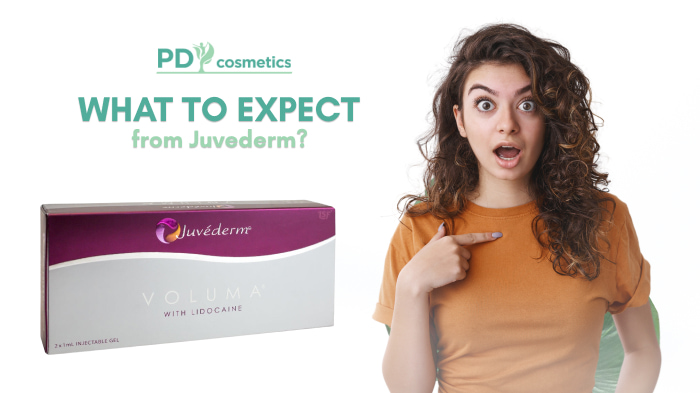
Juvéderm Voluma is a cross-linked hyaluronic acid filler designed for deeper placement where the face needs shape and structural support. Manufacturer instructions describe Voluma formulations supplied in prefilled syringes, with 1 ml per syringe in the referenced product configuration. The gel contains hyaluronic acid and lidocaine for injection comfort. Hyaluronic acid is a naturally occurring sugar molecule found in the body. In Voluma, it is processed into a cohesive, comparatively firm filler that can hold shape rather than simply soften superficial lines.
A typical syringe has several practical characteristics:
If the goal is a restrained cosmetic enhancement, 1 syringe can be divided between the two sides, allowing an injector to make small adjustments to midface volume while maintaining a natural appearance. It may be enough to restore volume where the deficit is relatively limited.
The number of syringes, however, should not be chosen before looking at the face. Facial width, cheek projection, asymmetry, skin quality, existing volume and aesthetic goals all matter. Using more filler does not automatically mean a better result, just as using 1syringe does not automatically guarantee subtlety. One syringe is more likely to fit the plan when:
Greater volume loss can involve much more than the highest point of the cheek. Changes in the deeper surrounding tissue and facial fat compartments can make the whole midface look flatter, so attempting to correct everything with a tiny amount of product may simply spread the filler too thin.
This is why most patients are better assessed by anatomy rather than a predetermined syringe count. A treatment plan may involve 1 syringe initially and additional product later, or several syringes distributed strategically when broader correction is appropriate.
Voluma was developed to add volume and contour rather than behave like a superficial wrinkle filler. For cheek treatment, it is FDA-approved for deep injection to correct age-related midface volume loss in adults over 21. Official labeling describes placement in the subcutaneous and/or supraperiosteal planes. That deeper role helps explain some of the main advantages of the product:
This is one reason cheek treatment is sometimes described as part of a liquid facelift, although that term can be misleading. Filler does not reproduce a surgical facelift, and the best anti aging effects usually come from modest correction of specific structural changes rather than trying to fill every crease.
One of the better-known features of Voluma is VYCROSS technology. The manufacturer describes it as a cross-linking process that produces a smooth HA gel designed for long-lasting results and a smooth look and feel.
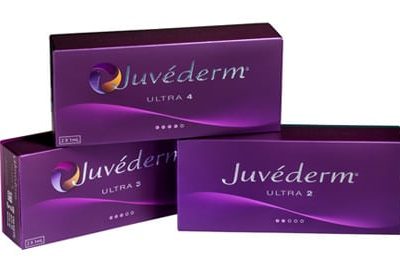
Among Juvederm fillers, products are not interchangeable simply because they contain hyaluronic acid. Juvederm Ultra, for example, has different indications and physical characteristics, while Voluma was developed for deeper volumization and contour. Choosing among dermal fillers therefore depends on the anatomical problem being treated, not only on brand preference.
A typical cosmetic procedure begins with facial assessment rather than injection. The injector looks at both cheeks from several angles, identifies asymmetry and decides where additional support would improve the face without distorting its existing structure. The treatment area is then cleaned and the injection points are planned.
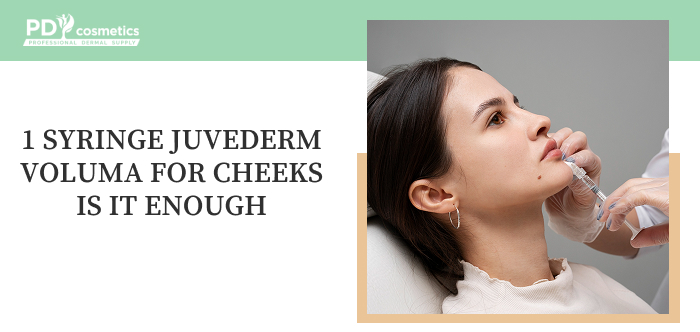
Voluma may be injected using a needle or cannula. The official cheek information describes product being placed into the cheek area to add volume, lift and contour, while FDA labeling specifies deep injection for cheek augmentation. During treatment, attention is usually given to:
Good cheek augmentation is often less about filling an obvious hollow and more about placing a small amount where it changes the structure most effectively.
Filler injections look simple from the outside, but facial anatomy is not simple. An experienced injector needs to understand the position and depth of important vessels as well as the changing anatomy of different faces. Inadvertent injection into a blood vessel is a rare but serious complication of facial filler treatment.
Official safety information lists tenderness, swelling, firmness, lumps or bumps, bruising, pain, redness, discoloration and itching among the most common side effects of Voluma cheek treatment. These reactions are generally temporary, although official clinical information notes that some treatment-site reactions can persist beyond a few days, commonly resolving within roughly two to four weeks.
Voluma is not permanent. Official Juvederm information states that cheek results can last up to two years with optimal treatment, and clinical follow-up found that many treated patients maintained satisfaction through that period. That does not mean every face looks unchanged for exactly 24 months. Product amount, metabolism, anatomy, injection technique and the degree of correction can all affect how the result evolves. Some people also have a touch-up rather than waiting until all visible correction has disappeared.
Factors that can affect how long cheek filler lasts include:
Adding cheek support can sometimes change the way nearby tissue sits, so smile lines may appear somewhat softer after midface treatment. That is different from directly injecting the fold, however, and a cheek treatment should not be expected to erase every line around the mouth. The same distinction applies to marionette lines and tear troughs. They belong to different anatomical regions and may require different products or no filler at all. Modern facial rejuvenation works better when each area is assessed separately instead of treating every concern with the same syringe.
Voluma has additional approved indications, including chin augmentation and treatment of temple hollowing, but those uses have their own injection patterns and treatment considerations. Being FDA-approved for several facial areas does not mean leftover product should simply be moved from one region to another without a plan.
This matters when people think about cosmetic treatments as a package. A cheek may need support while the chin needs nothing, or facial balance may benefit from treatment in more than one region. The appropriate distribution depends on anatomy rather than trying to use every last fraction of a syringe.
The total cost of treatment depends partly on how much filler is actually required, but syringe count is not the only factor. Provider expertise, geographic location, follow-up policies and whether several areas are being treated can all affect the final price.
For someone seeking natural results, starting conservatively can sometimes make more sense than committing to a large correction immediately. One syringe may provide exactly the right degree of improvement. Another face may need two or more to achieve comparable balance. The decision should come from the desired shape and anatomy rather than from the idea that every cheek treatment requires the same amount.
It can be enough for mild volume loss or a subtle lift. More pronounced volume loss may require additional filler depending on facial structure and treatment goals.
There is no fixed number for everyone. The amount depends on cheek volume, facial symmetry, age-related changes, and how noticeable the desired correction should be.
FDA approval means a filler has been evaluated for specific indications and uses. Safety still depends heavily on correct product selection, injection technique, and treatment by a qualified medical professional.
Yes. Voluma has approved uses for adding volume and improving contour in certain facial areas, including the chin, although the injection approach differs from cheek treatment.
It can add projection, restore lost midface volume, and improve facial balance. The result can range from very subtle shaping to a more noticeable contour depending on the amount used.
Placement varies according to anatomy and the desired result. An injector may target deeper structural areas or subcutaneous tissue to create support, contour, and balanced volume.
They have different textures, indications, and lifting characteristics, so the choice depends on anatomy and the intended correction. For deeper cheek volume, an injector may also consider products specifically designed for structural midface support.